

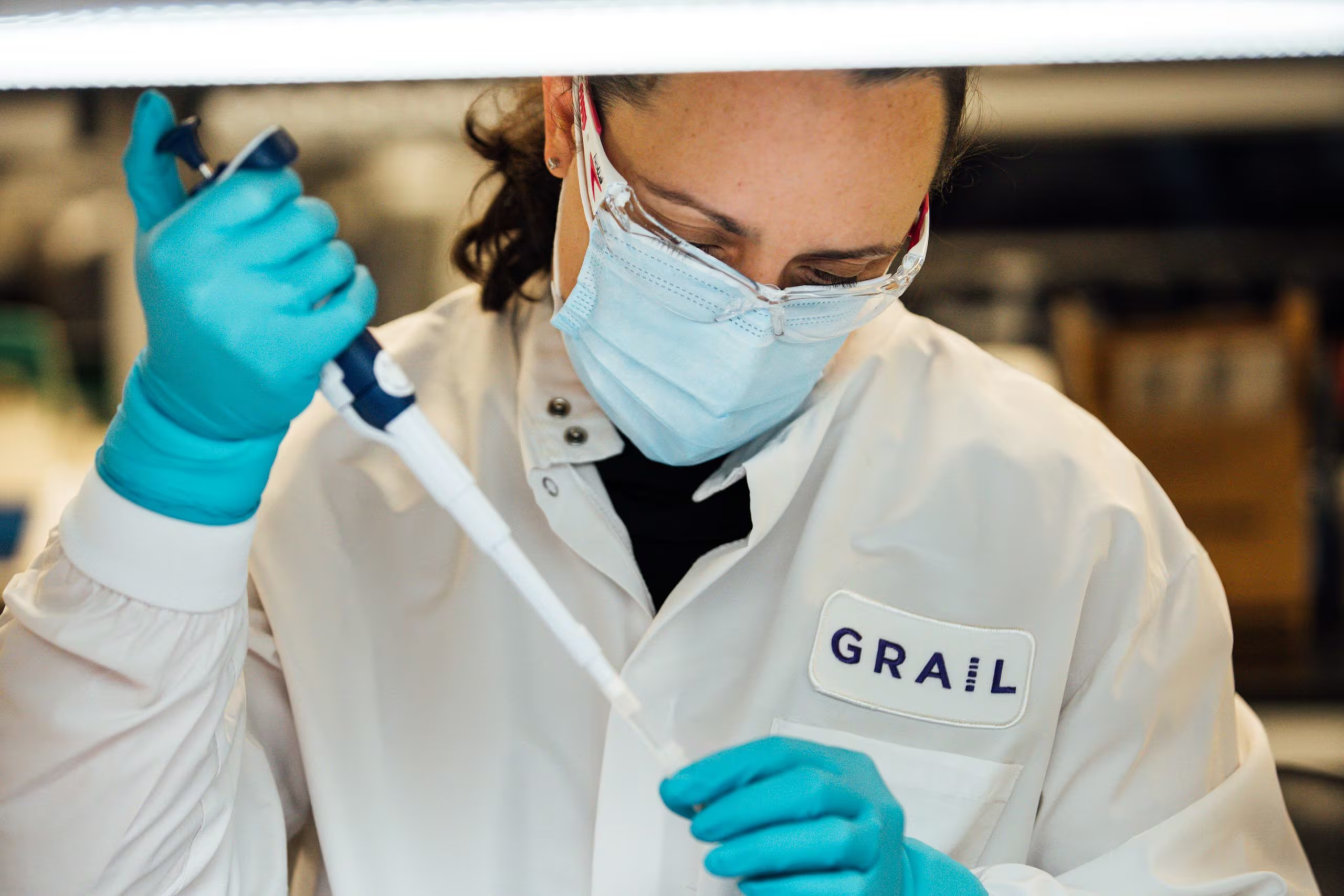
Shares of Grail nosedived by nearly 50% on Friday after the biotech firm revealed discouraging results from a major clinical trial in the United Kingdom. The findings sent shockwaves through investors and reignited debate over the effectiveness and commercial viability of its flagship blood-based cancer screening test.
In fact, Grail’s stock tumbles after a UK study casts fresh uncertainty over the future of its cancer screening test, highlighting the market’s swift reaction to the unexpected outcome.
A Crucial UK Trial Delivers Disappointing Results
The three-year study, conducted in collaboration with National Health Service, involved approximately 142,000 participants between the ages of 50 and 77 who showed no symptoms of cancer. Researchers aimed to determine whether adding Grail’s multi-cancer early detection test, known as Galleri, to routine screening would identify cancers earlier and reduce the number of late-stage diagnoses.
The goal was straightforward: shift cancer detection toward earlier, more treatable stages and ultimately lower cases diagnosed at stages three and four. However, the data showed no statistically significant reduction in advanced cancers among participants who received the Galleri test compared with those who did not.
The outcome dampened hopes that the test could dramatically improve population-level cancer detection through routine screening.
Implications for U.S. Regulatory Approval
The UK trial results also cast a shadow over Grail’s regulatory pathway in the United States. The company recently submitted an application to the U.S. Food and Drug Administration seeking approval for Galleri. The filing relied on data from a smaller U.S.-based study, early findings from the UK trial, and additional bridging analyses comparing earlier and updated versions of the test.
Analysts at TD Cowen noted that while the FDA is expected to focus primarily on clinical validity data from three key studies — rather than leaning heavily on the UK trial — the new results still introduce uncertainty. Concerns extend beyond regulatory approval to potential reimbursement decisions, particularly from Medicare.
Medicare and Market Outlook in Focus
Investor attention is now shifting toward an ongoing U.S. study involving the Medicare program. This trial is designed to evaluate whether Galleri can meaningfully reduce stage-four cancer diagnoses. Success in that study could prove critical for securing Medicare coverage — a major milestone for commercial adoption.
Guggenheim analyst Subbu Nambi suggested that the UK findings may complicate adoption within Britain more than they threaten U.S. approval. Meanwhile, TD Cowen analyst Dan Brennan emphasized the importance of transparency, stating that clearly outlining both the strengths and weaknesses of the trial could help investors and clinicians better understand the broader picture.
Company Response and Next Steps
Despite the disappointing headline results, Grail pointed to what it described as a “favorable trend” within the data. The company believes that extended monitoring may reveal stronger benefits over time and has announced plans to lengthen the trial’s follow-up period by an additional six to twelve months.
Executives argue that early detection technologies often require longer-term evaluation to fully measure their impact. However, for investors, patience may be in short supply as questions linger about the test’s real-world effectiveness.
A Defining Moment for Grail
The UK study was widely seen as a pivotal milestone for Galleri’s broader rollout. While the results do not necessarily close the door on regulatory approval or future adoption, they introduce a new layer of complexity at a critical time for the company.
With U.S. regulatory review underway and Medicare data still pending, the coming months could prove decisive. For now, however, Grail’s stock tumbles after a UK study casts fresh uncertainty over the future of its cancer screening test, underscoring how tightly investor confidence is tied to clinical performance in the high-stakes world of early cancer detection.
