

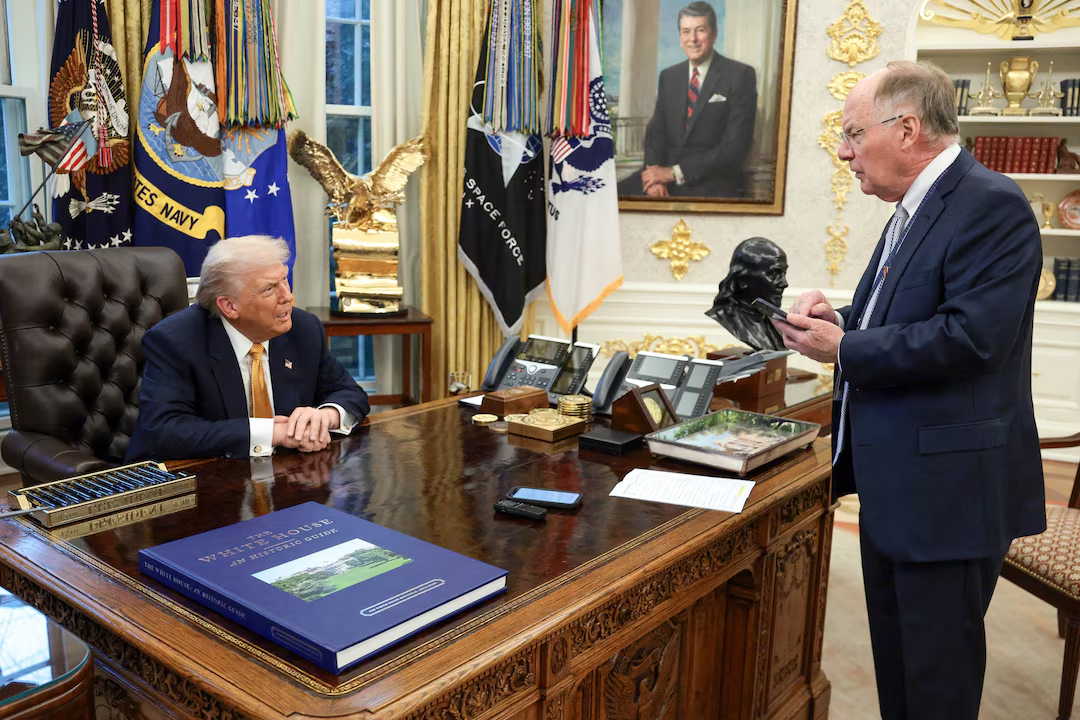
In a wide-ranging Oval Office conversation with Reuters, President Donald Trump addressed a variety of pressing national and international issues. During the 30-minute discussion, he brushed aside concerns about the economy, Greenland, and an investigation into Federal Reserve Chair Jerome Powell. He also spoke about ongoing conflicts in Gaza and Ukraine, defended immigration enforcement actions, and even reflected on the upcoming midterm elections.
Below are the Five Key Insights from Reuters’ Interview with President Trump, highlighting the most important moments from the exchange.
Trump Sticks to His Own Approach
Throughout the interview, Trump made it clear that he remains confident in his personal judgment, regardless of public opinion or political pressure. He dismissed criticism from voters, business leaders, and members of his own party on several issues.
When informed that a recent Reuters/Ipsos poll showed little public support for taking control of Greenland, Trump rejected the findings outright, labeling the poll as “fake.”
He reacted similarly when questioned about Republican resistance to investigating Jerome Powell, responding bluntly, “I don’t care.” He repeated the same phrase when reminded that JPMorgan CEO Jamie Dimon had warned White House interference in the Federal Reserve could damage the economy.
On concerns about rising prices, Trump insisted that the U.S. economy was the strongest it has ever been. He admitted, however, that he could do a better job highlighting his administration’s achievements, even pointing to a prepared binder listing his accomplishments.
According to Trump, political popularity is not his priority. “You have to just do what’s right,” he said, emphasizing that many of his decisions were initially unpopular but ultimately successful.
Uncertainty Surrounding Iran Policy
Earlier in the day, Trump suggested that the Iranian government’s crackdown on protesters might be easing, though he declined to reveal the source of that information. During the Reuters interview, he remained vague about his broader plans for Iran.
Despite previously issuing strong warnings toward Tehran, Trump avoided taking a firm stance on whether the U.S. should push for regime change. He also declined to support Reza Pahlavi, the exiled crown prince of Iran, as a potential future leader.
“I don’t know how he’d play within his own country,” Trump remarked. “We have to play it day by day.”
His comments suggested that U.S. policy toward Iran remains in a wait-and-see phase.
Challenges in Achieving Peace
Trump also spoke about two major foreign policy goals: securing peace in Gaza and ending the war between Russia and Ukraine. While he expressed optimism, he admitted both efforts are facing serious difficulties.
Regarding Gaza, Trump acknowledged that Hamas had not fully disarmed, which was a key condition of the ceasefire agreement. He questioned whether the militant group would ever comply.
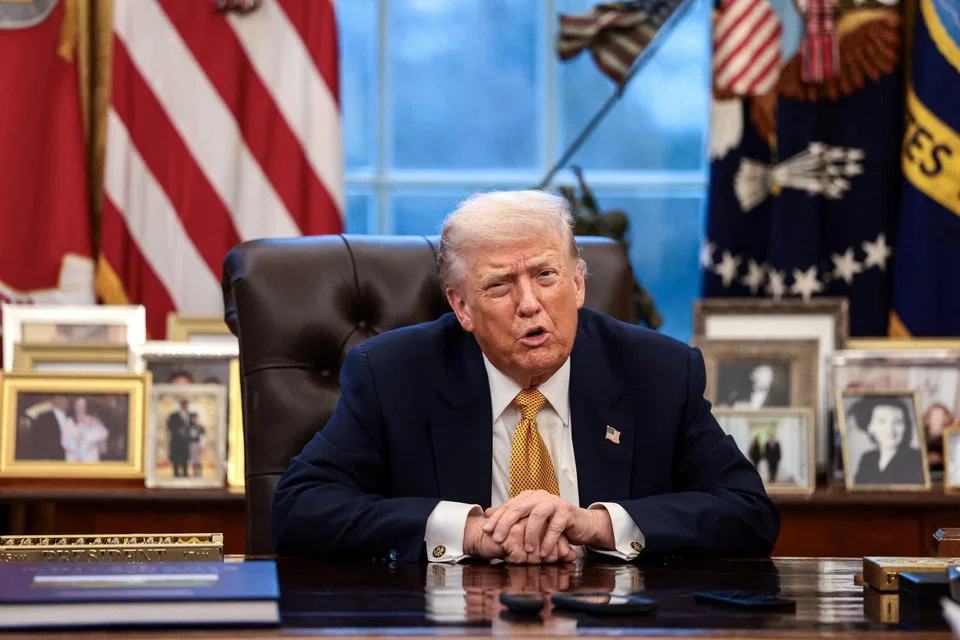
“They were born with a gun in the hand,” Trump said, adding that it remains uncertain whether a lasting resolution can be achieved.
On Ukraine, Trump suggested that Russian President Vladimir Putin was open to negotiations. However, he pointed to Ukrainian President Volodymyr Zelenskiy as the main obstacle, implying that Ukraine’s leadership is unwilling to compromise enough to reach a deal.
Strong Support for ICE Operations
The president also defended recent Immigration and Customs Enforcement (ICE) actions, including the deployment of heavily armed agents in American cities.
When asked about the fatal shooting of Renee Nicole Good by an ICE officer in Minneapolis, Trump described the incident as “very unfortunate.” Nevertheless, he stood firmly behind the officers involved and the broader enforcement strategy.
“I know that it was a tough situation to be in,” he said, arguing that law enforcement had not been shown proper respect.
Trump vowed to continue aggressive immigration enforcement, claiming his policies had removed “thousands of murderers” from the country—an assertion for which there is currently no supporting evidence.
Realistic Expectations for the Midterms
Toward the end of the interview, Trump turned to domestic politics and the upcoming midterm elections. He admitted frustration with the historical trend that often sees the president’s party lose seats in Congress during midterms.
“It’s some deep psychological thing,” Trump said. “When you win the presidency, you don’t win the midterms.”
Despite his confidence in his record, he acknowledged the possibility that Republicans could lose control of either the House or Senate. In typical Trump fashion, he added that his administration had accomplished so much that, in his view, elections should barely even be necessary.
Final Thoughts
The Reuters interview offered a revealing glimpse into President Trump’s mindset and priorities. From foreign policy uncertainties to domestic political battles, the conversation underscored his unshakable confidence and unconventional leadership style.
