


The world increasingly speaks the language of democracy, yet acts through force, invokes sovereignty, and then declares it obsolete when it becomes inconvenient. Iran has now found itself at the center of this very double standard. At the same time, the position of Türkiye, one of the region’s key actors, has become the subject of intense debate, ranging from accusations of “supporting the regime” to attempts to portray Ankara as a covert architect of a new balance of power.
Why does Türkiye favor a predictable status quo over the risks associated with so-called managed revolutions? Where does its true “red line” lie? How closely is the Iranian factor linked to the Kurdish issue, fears of state fragmentation, and the lessons drawn from Iraq and Syria? And finally, why does the concept of sovereignty suddenly become “inconvenient” when applied to non-Western states?
News.Az discusses the logic behind Türkiye’s strategy, the myths surrounding the Iranian crisis, multipolarity as a tool for survival, and why chaos represents the worst possible outcome for the entire region with Jakub Korejba, a Polish political scientist and analyst at the Ankara Center for Eurasian Studies.
– Jakub, why has Türkiye, while declaring its commitment to regional stability and reforms, effectively adopted a position that supports the current regime in Iran, favoring the preservation of a predictable status quo over possible political change?
– Türkiye’s approach to the Iranian issue is best examined through the prism of multi-level analysis — a method that is simple, at times even banal, yet surprisingly effective. Yes, it has its shortcomings, but its main advantage is clear: it explains how states actually behave.
At every level — international, regional, local, and domestic — Türkiye has its own reasons for acting as it does today. These reasons stem from its strategic interests. Ankara proceeds from the assumption that maintaining stability in Iran, however imperfect or controversial, but predictable, is preferable to any abrupt transformation which, from Türkiye’s perspective, would mean chaos.
This is not about “good” or “bad” stability, but about known stability. In politics, a known evil is almost always preferable to an unknown good. States, especially those located in zones of chronic turbulence, instinctively seek to minimize uncertainty. Türkiye is surrounded by crises on nearly all sides — from the Middle East to the Caucasus and the Eastern Mediterranean. An additional source of instability is simply unnecessary.
– Can it be argued that Türkiye’s position on Iran is not support for Tehran as such, but rather an attempt to preserve a multipolar balance and protect its own strategic sovereignty amid growing U.S. pressure?
– At the international level, Türkiye’s key motivation lies in its rejection of a unipolar world fully controlled by the United States. An American-centric global order does not suit Ankara. On the contrary, Türkiye consistently orients itself toward the formation of a multipolar system — one that creates room for maneuvering, balancing, and exploiting contradictions among the leading global power centers.
It is precisely within such a framework that Türkiye can consolidate itself as a mid-range power — a state of intermediate strength possessing not formal, but real decision-making sovereignty. Unlike many countries whose foreign-policy autonomy is minimal or nonexistent, Ankara seeks to expand its own “decision corridor.” In a unipolar world, Türkiye would inevitably find itself in the role of a U.S. satellite, a scenario the Turkish political elite fundamentally rejects.
This explains Ankara’s particular sensitivity to the Iranian factor. Transforming Iran into a state fully controlled by the United States—whether through replacing the Islamic regime with a pro-American construct headed by Reza Pahlavi Jr. — would mean a sharp expansion of American hegemony. Such an Iran would become not merely an ally, but a managed instrument of Washington, objectively narrowing Türkiye’s room for independent policy.
U.S. control over Iran would strengthen American positions not only strategically, but also economically, energetically, and logistically, radically altering the balance of power in Eurasia. For Ankara, this would translate into the loss of a significant portion of its foreign-policy maneuverability.
At the regional level, the logic is even more pragmatic: Türkiye does not need new sources of instability along its borders. Any radical transformation of Iran risks triggering a chain reaction of conflicts, migration flows, and shifts in influence — problems Ankara would rather not import into its sphere of responsibility.
– Can we say that Ankara’s main red line today runs not along state borders, but along the boundary between manageable instability and irreversible chaos, and that this is why a scenario involving Iran’s disintegration is perceived as an existential threat?
– Türkiye is effectively surrounded by a belt of instability.
To the north lies the Black Sea and the war between Russia and Ukraine.
To the northwest, the Balkans, where tensions merely change form without disappearing.
To the west, Greece, with chronic disputes in the Aegean.
To the south, the Cyprus issue.
To the southeast, the Middle East — Syria, Iraq, and the Israeli-Palestinian conflict.
To the east, the Caucasus, where the situation in recent years has stabilized largely due to Azerbaijan’s role in assuming responsibility for regional security, though the risk potential there remains high.
Here an extremely uncomfortable topic arises, one Ankara prefers not to discuss publicly. Turkish diplomats, officials, and experts tend to avoid it — namely, the North Caucasus. Everyone understands the explosive potential concentrated there, but public discussion is viewed as an unnecessary headache that Türkiye deliberately chooses not to engage with.
Against this backdrop, an additional destabilizing factor in the form of a revolutionary or post-revolutionary Iran appears entirely undesirable for Ankara. Yes, the current Iranian configuration is far from optimal from Türkiye’s point of view, but it is predictable, manageable, and, most importantly, familiar. That, in strategic terms, is far preferable to chaos.
The experiences of Iraq and Syria clearly demonstrated the consequences of the collapse of even relatively smaller states. Iran, however, is a far more complex, multi-layered, and larger country. Turkish strategists understand well that when systems of this magnitude collapse, the consequences become uncontrollable.
Moreover, Ankara has minimal confidence in the ability of the United States to manage such processes in the region. Afghanistan and Iraq stand as examples of systemic failure. If Iraq proved unmanageable, then managing Iran would be even less feasible. This is why preserving a difficult but stable Iran appears to Türkiye as a far less risky scenario than its destabilization.
– Can it be said that attempts to destabilize Iran from outside would inevitably trigger a regional domino effect, first and foremost along the Kurdish line, and that this is precisely why neither the U.S., nor Israel, nor especially Türkiye are prepared to move from pressure to an actual scenario of collapse and chaos?
– I have visited Iran many times and know this country not only in theory, but in practice. This is a separate discussion, but the main point is clear: external governance in Iran is impossible — politically, socioculturally, and institutionally.
This can be explained quite directly to Donald Trump, his advisers, and counterparts in Tel Aviv. In fact, Israel appears to understand this perfectly well: even at a purely theoretical level, a scenario of external control over Iran simply does not work.
There is also another issue, usually discussed in hushed tones but of critical strategic importance — the Kurdish factor. Chaos in Iran would inevitably lead to the strengthening of both legal and illegal Kurdish formations and to attempts to unite Iran’s Kurdish territories with Kurdish zones in Iraq and Syria.
This, in turn, would trigger a chain of risks: increased terrorism, separatism, and cross-border destabilization. This is no secret in Ankara or Istanbul. For Türkiye, the Kurdish issue remains the number one security concern. In recent years, Ankara has developed workable mechanisms of containment and control, and no one is interested in destroying this fragile balance.
– Why, in your view, does the idea of sovereignty become “outdated” precisely when it interferes with Western interests, yet become sacred again when Western states themselves are concerned?
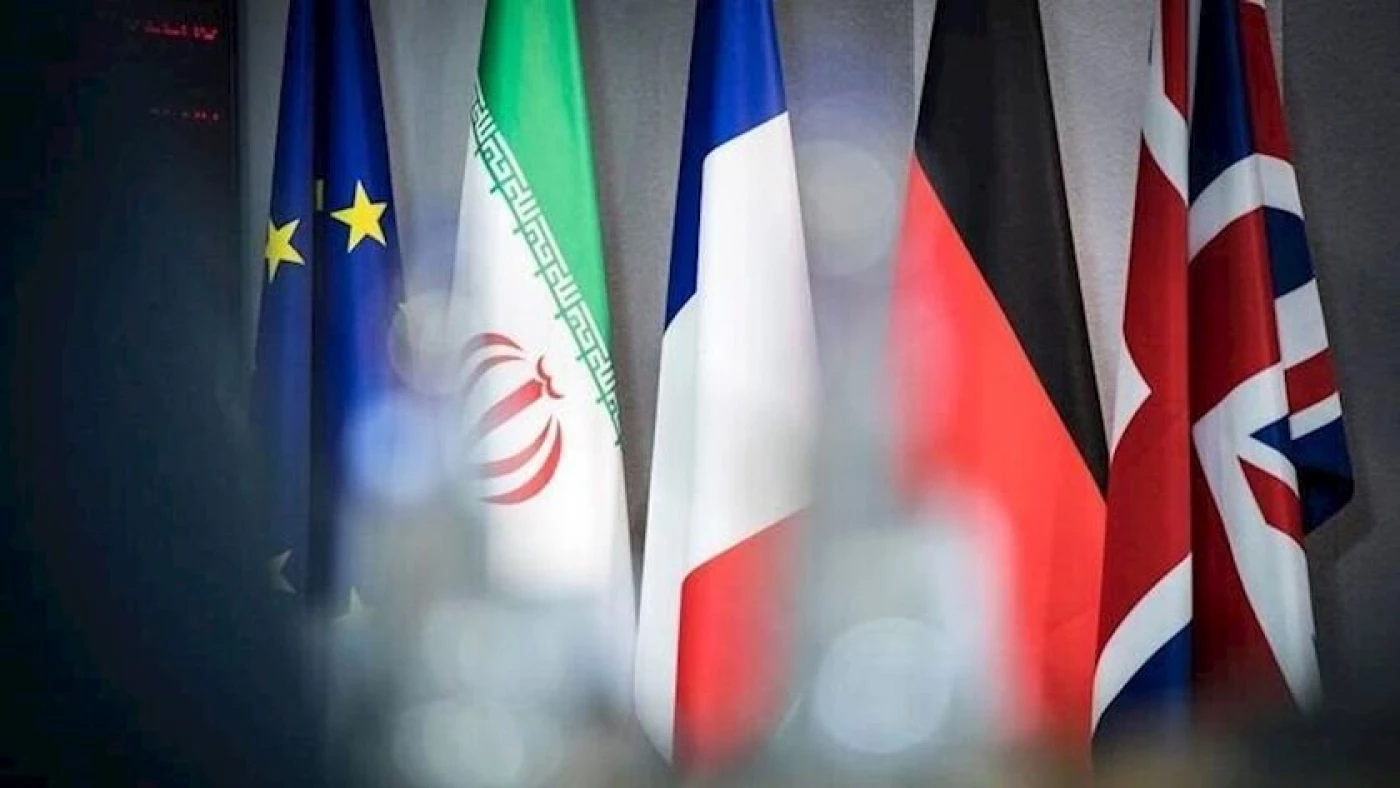
Source: thenewregion
– Chaos in Iran’s border regions — the proliferation of weapons, the weakening of central authority, the clash of competing interests in Kurdish areas — would automatically translate into a direct threat to Türkiye. But there is also a deeper, internal dimension to this issue.
In Türkiye, sovereignty is not an abstract formula or a bargaining chip. It is a sacred category, understood in an absolute sense, unlike the conditional perception of sovereignty in some European Union countries. Any precedent of its violation, especially through externally inspired regime change, is perceived as an extremely dangerous signal.
Moreover, long-standing disagreements exist between Türkiye and its Western partners, including the United States and Europe, regarding Türkiye’s internal political system. These differences are often instrumentalized under the banners of “democracy,” “human rights,” and the “rule of law.”
Ankara is fully aware of the trajectory of its political system, and President Recep Tayyip Erdogan experiences this external pressure on a daily basis. Allowing such a scenario in a neighboring state would amount to de facto legitimizing the possibility of its repetition within Türkiye itself. No sovereign authority can afford such a risk.
Sovereignty, for all its costs, remains the primary guarantee of relative stability. Undermining it almost inevitably leads to chaos and systemic risks, regardless of how attractively such actions are justified.
Concepts such as democracy, human rights, the market economy, and the rule of law carry different meanings in different societies. Attempts to impose a universal interpretation from outside, particularly by the West, entail not only the risk of destabilization, but also a strong element of hypocrisy. Behind polished slogans, crude, old-school geopolitical interests too often lie hidden.
This scenario has played out repeatedly across different regions of the world. And, frankly speaking, this is precisely the logic underpinning Türkiye’s position.
