

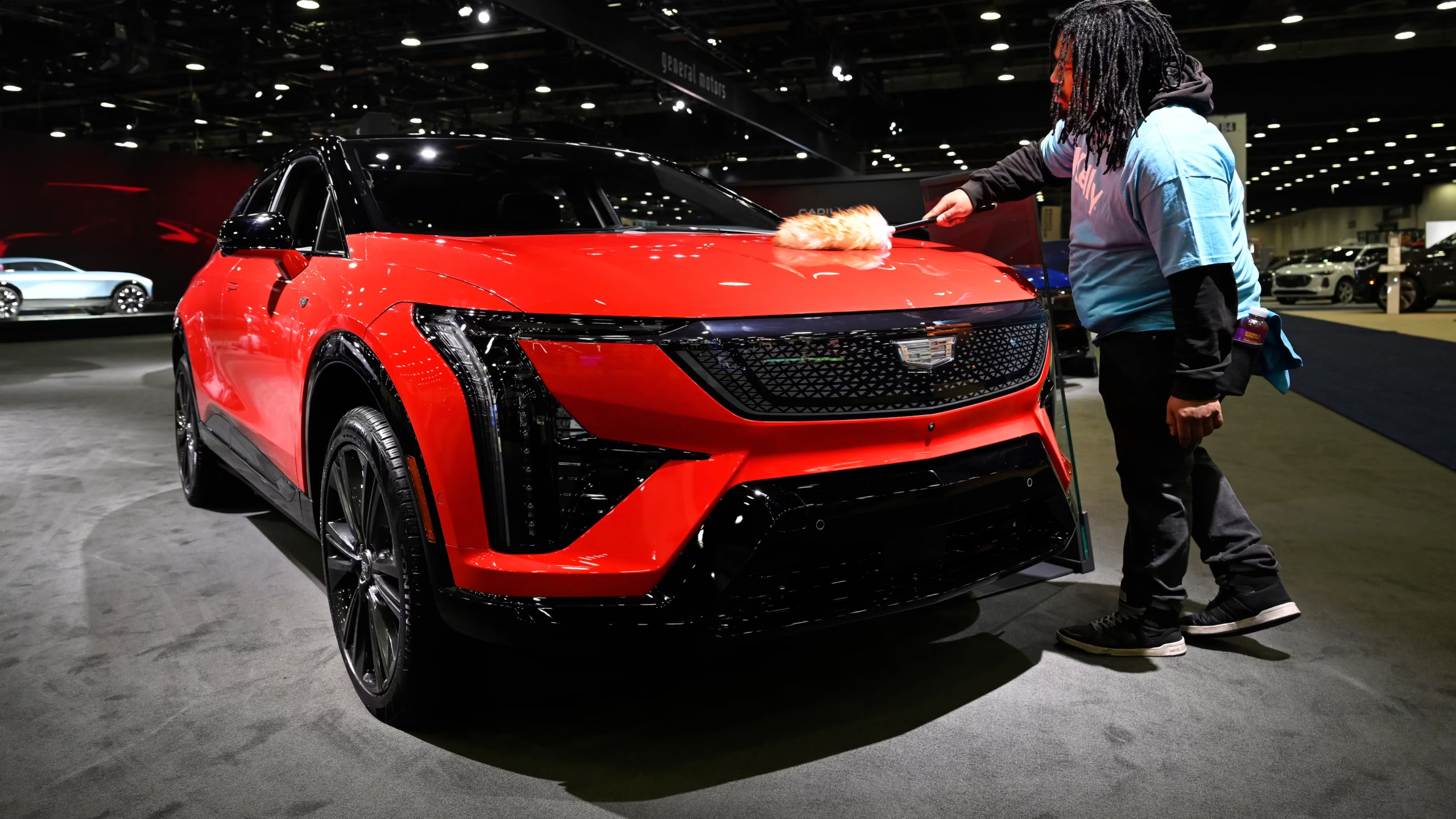
The roar of engines and the screech of tires once again echo through the North American International Auto Show as visitors line up to test-drive the latest vehicles on indoor tracks. Not long ago, one of these tracks was reserved exclusively for electric vehicles (EVs), a symbol of how quickly U.S. automakers were racing toward an electric future. This year, that distinction has disappeared.
Instead, both test tracks now feature a mix of hybrids and traditional gasoline-powered cars—a visible sign that Electric Vehicles Take a Back Seat at the Detroit Auto Show amid a broader industry shift.
A Show That Mirrors the Market
Event organizers say the change reflects evolving consumer demand rather than a rejection of new technology. Todd Szott, chairman of this year’s show, noted that the exhibition has always been a snapshot of where the industry stands at the consumer level. With buyer enthusiasm for EVs cooling and policy winds shifting in Washington, the auto show’s lineup has adjusted accordingly.
Behind the scenes, many automakers are leaning into what they describe as “consumer choice,” offering a broader mix of powertrains. Yet some analysts warn that stepping back too far from electrification could leave U.S. manufacturers vulnerable as global competitors push ahead.
Michael Robinet of S&P Global Mobility cautioned during an industry panel that the real question is long-term competitiveness. As other regions accelerate toward electrification—particularly China—America risks losing ground in what many see as the defining technology of the future.
Slower Momentum at Home, Faster Abroad
Recent data underscores that concern. Growth in U.S. sales of electrified vehicles, including plug-in hybrids, barely nudged upward last year. By contrast, China recorded strong double-digit growth, while Europe surged even further ahead. Pure EVs now account for less than 8% of the U.S. market, a figure that has slightly declined year over year.
Those numbers did not appear to trouble President Donald Trump during his recent visit to the Ford River Rouge Complex. Touring the historic manufacturing hub, Trump highlighted policy moves aimed at rolling back EV mandates and boosting fossil fuel production. He framed the changes as a win for automakers and consumers alike, emphasizing freedom of choice over government targets.
Since returning to office, Trump has reversed prior goals that encouraged rapid EV adoption, scaled back federal support for charging infrastructure, and reduced tax incentives that once made electric cars more affordable. Fuel economy standards have also been loosened, easing pressure on automakers to meet strict efficiency benchmarks.
The Cost of Changing Course
These shifts have had real financial consequences. Ford Motor Co. recently reported billions of dollars in charges tied to its electrification strategy and halted production of certain all-electric models. Rival General Motors has also scaled back some EV plans, absorbing significant losses in the process. Even industry leader Tesla faced a challenging year as demand softened.
Still, some within the industry insist electrification remains central to their long-term vision. Ford marketing manager Shawn Strain acknowledged that while the push may be less visible than before, the company continues to invest in electric technology behind the scenes.
Global Pressure and Political Warnings
Concerns about falling behind were echoed by Michigan Governor Gretchen Whitmer, who warned that China is rapidly gaining dominance across the auto supply chain. With Chinese manufacturers capturing market share in nearly every region outside North America, she urged U.S. leaders and companies to confront the challenge head-on.
Analysts like Will Roberts of Benchmark Mineral Intelligence argue that U.S. policy has played a decisive role in shaping today’s landscape. While automakers have adapted, he believes maintaining strong EV development “in the background” is critical to staying competitive.
Former Transportation Secretary Pete Buttigieg struck a similar note at another show panel, arguing that while political leaders may slow adoption, they cannot stop the global shift toward electric vehicles. What they can do, he warned, is prevent America from leading that transition.
As the Detroit Auto Show showcases more hybrids and gas-powered models, the message is clear: the road to electrification in the U.S. has become more cautious. Whether that pause proves strategic or costly will depend on how quickly the rest of the world continues to accelerate.
