

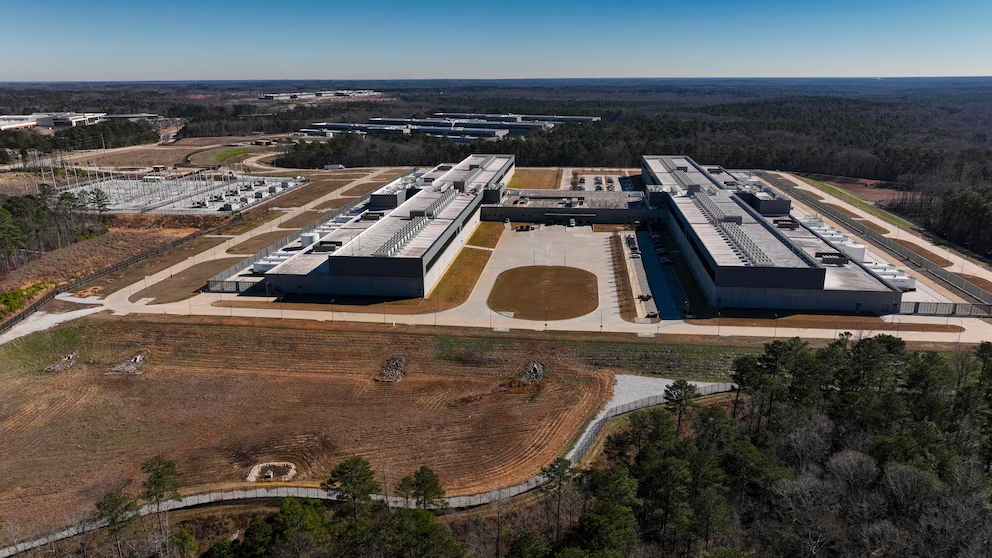
As artificial intelligence continues to expand at breakneck speed, energy demand is surging alongside it — and that’s now becoming a political flashpoint. In a high-profile move, the White House and a bipartisan coalition of state governors are turning up the pressure on PJM Interconnection, the operator of the mid-Atlantic power grid, urging swift action to prevent electricity shortages and spiraling costs.
The initiative, unfolding at a White House event on Friday, comes as voters grow increasingly uneasy about the massive amounts of electricity required to run AI-driven data centers. With elections looming later this year, energy affordability and reliability are fast becoming top-tier campaign issues.
A Push for New Power Supply
According to administration officials, the White House’s National Energy Dominance Council, along with governors from states such as Pennsylvania, Ohio, and Virginia, wants to push PJM Interconnection to conduct a special power auction. The goal: allow major technology companies to bid on long-term contracts that would help finance the construction of new power plants.
The Trump administration and participating governors are expected to formalize this approach by signing a joint statement of principles. The plan was previously reported by Bloomberg.
“Ensuring the American people have reliable and affordable electricity is one of President Trump’s top priorities,” said White House spokesperson Taylor Rogers. “This effort is aimed at delivering long-term relief to consumers across the mid-Atlantic.”
Pennsylvania Governor Josh Shapiro, a Democrat, is expected to attend the event. Sources familiar with his plans say Shapiro conditioned his participation on including provisions to extend existing caps on wholesale electricity price increases — a move designed to shield consumers from sudden bill spikes.
PJM on the Sidelines
Notably absent from the event will be PJM Interconnection itself. “PJM was not invited. Therefore, we would not attend,” spokesperson Jeff Shields said, underscoring growing tensions between policymakers and the grid operator.
It also remains unclear whether Donald Trump will personally attend the event, as it does not appear on his public schedule.
Rising Bills, Rising Stakes
Both federal and state leaders are under mounting pressure to protect households and businesses from the soaring costs associated with powering Big Tech’s energy-hungry data centers. Across the country, more Americans are falling behind on their electricity bills, consumer advocates warn.

The mid-Atlantic grid — which spans all or parts of 13 states from New Jersey to Illinois, plus Washington, D.C. — has already seen billions of dollars added to consumer bills to support data center power needs. Yet advocates argue that these higher costs are not translating into enough new power plants to meet demand.
This imbalance is becoming politically consequential. In many regions, data centers are coming online faster than power generation and transmission infrastructure can keep up. Communities facing the steepest rate hikes are expected to play an outsized role in deciding key races this November.
Energy costs were already a decisive issue in recent gubernatorial and regulatory elections in states like New Jersey, Virginia, and Georgia. Voters in New Jersey, Virginia, California, and New York City consistently rank economic pressures — especially affordability — as their top concern, setting the stage for fierce midterm debates over utility rates and infrastructure investment.
Utilities Seek Billions More
Adding to the strain, gas and electric utilities sought or secured more than $34 billion in rate increases during the first three quarters of 2025, according to consumer advocacy group PowerLines. That figure is more than double what utilities pursued during the same period a year earlier.
Against this backdrop, How the White House and State Governors Plan to Address AI-Driven Power Shortages and Rising Energy Costs is no longer just a policy question — it’s shaping up to be a defining issue for voters, regulators, and the future of America’s AI-powered economy.
