

In a landmark ruling that has reignited debate across the country, Spain’s highest court has dismissed a father’s attempt to stop his daughter’s euthanasia, affirming her legal right to proceed under the nation’s assisted-dying law.
The decision came from the Constitutional Court of Spain, which rejected the father’s appeal against a series of lower court rulings that had supported his 25-year-old daughter’s request for euthanasia. In its statement, the court concluded that there had been no breach of fundamental rights and upheld the legality of the process already approved in her case.
Spain’s Assisted Dying Law
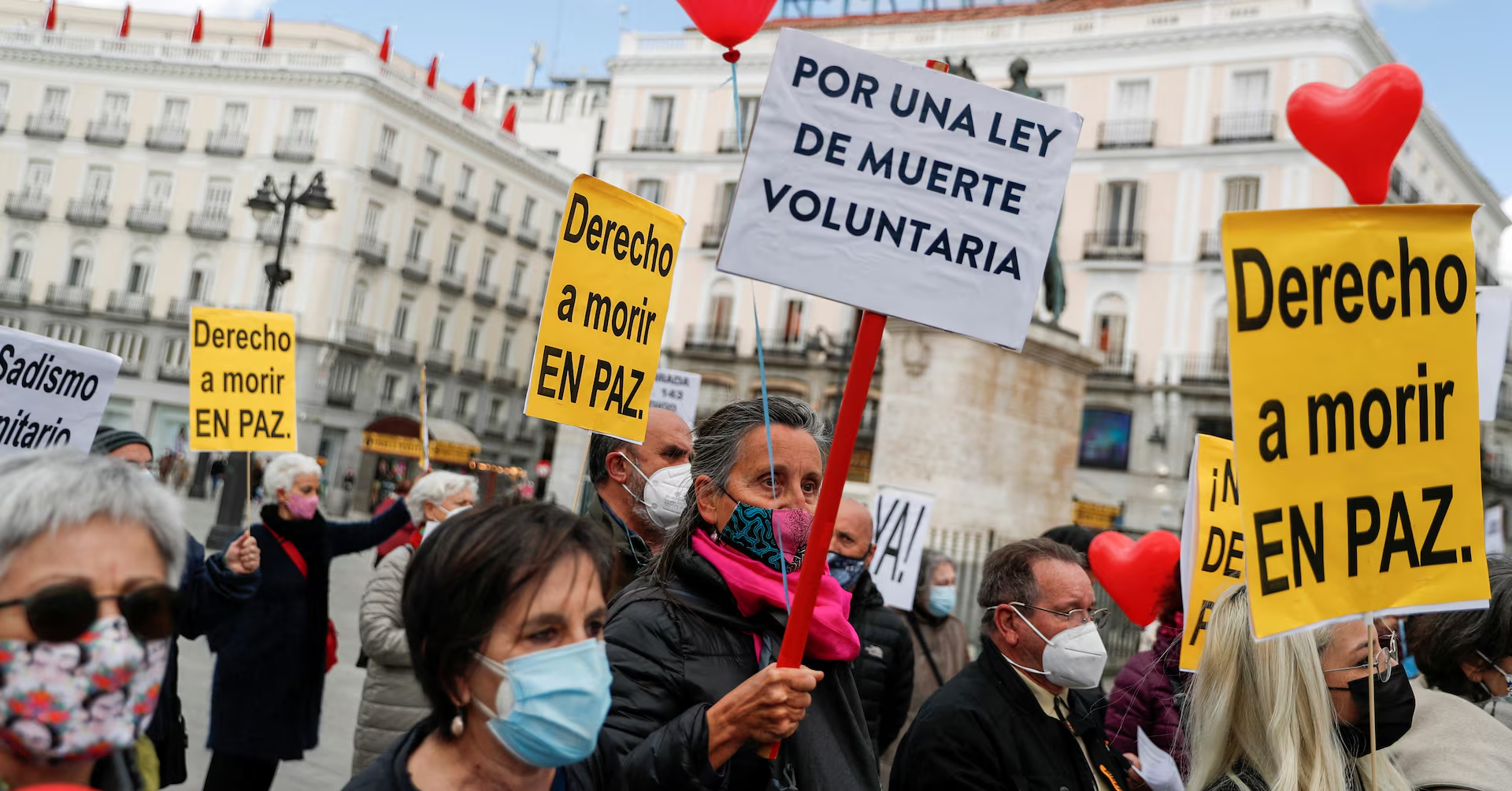
Spain legalized euthanasia and assisted suicide in 2021, becoming the fourth country in the European Union to permit the practice under strict conditions. The law allows individuals suffering from incurable illnesses or severe, debilitating conditions to request medical assistance in ending their lives, provided they meet stringent legal and medical criteria.
Government figures show that in 2024 alone, 426 people received assistance in dying. The legislation followed years of intense public debate and strong resistance from conservative political groups and the Catholic Church, which has historically influenced attitudes toward end-of-life decisions in Spain.
The Woman’s Medical Background
According to court documents and medical evaluations, the woman had struggled for years with a psychiatric disorder and had previously attempted suicide multiple times through medication overdoses. In October 2022, she jumped from a fifth-floor window, an act that left her paraplegic and suffering from chronic, incapacitating pain.
Medical reports presented to the court described her condition as severe and irreversible, with no realistic prospect of improvement. Physicians concluded that she experiences persistent suffering that significantly limits her daily life.
In July 2024, a specialized review committee in the region of Catalonia approved her euthanasia request after a comprehensive evaluation. The procedure was scheduled for August 2, 2024. However, her father intervened legally, delaying the process while pursuing appeals through the courts.
The Father’s Argument
Supported by the ultra-conservative legal advocacy organization Abogados Cristianos, the father argued that his daughter’s mental health condition compromised her ability to make a free and fully informed decision about ending her life. He maintained that her psychological state rendered her request invalid.
Despite these arguments, multiple lower courts ruled in favor of the woman’s autonomy. Ultimately, the Constitutional Court determined that the legal safeguards embedded in Spain’s euthanasia framework had been properly followed and that her fundamental rights had not been violated.
Case May Move to European Court
Following the Constitutional Court’s decision, Abogados Cristianos announced plans to escalate the case to the European Court of Human Rights. The group’s president, Polonia Castellanos, said they would continue fighting to defend what they see as the parents’ right to protect their daughter’s life.
The ruling highlights the ongoing tension between personal autonomy and ethical objections surrounding assisted dying. While public opinion in Spain generally favors the right to euthanasia under regulated conditions, emotionally charged cases such as this continue to test the boundaries of law, morality, and family intervention.
For now, the Constitutional Court’s judgment stands as a powerful affirmation of individual choice under Spain’s assisted-dying legislation — even in the face of deeply personal and legal challenges.
